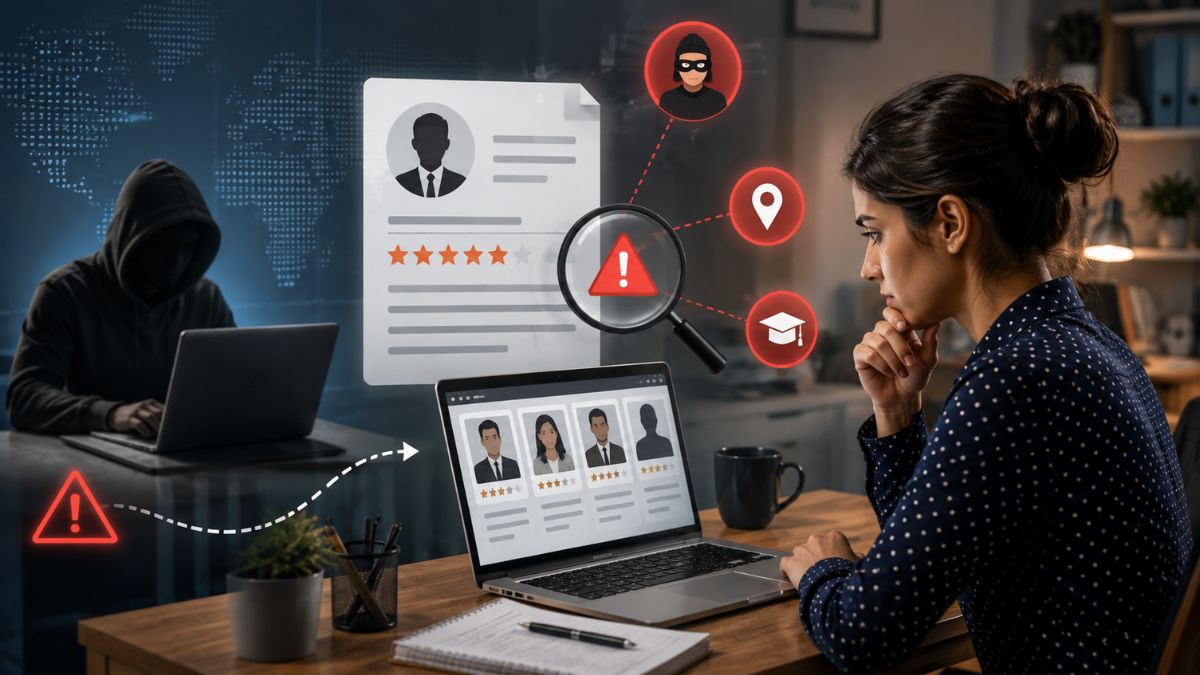







When you’re sifting through dozens of applications, the ability to quickly answer the question how to spot a fake resume can save you time, money, and a lot of headaches. Over the years I’ve watched candidates try everything from bland exaggerations to full‑blown fabricated careers. Below is a straight‑to‑the‑point guide that blends real‑world anecdotes with the latest verification tricks. Keep reading and you’ll walk away with a printable checklist, a few AI‑powered tips, and a clear path for staying legally sound.
Date Gaps and Timeline Inconsistencies
What it looks like: A two‑year stint at Company X ends in June 2020, but the next role doesn’t start until March 2022. The resume shows a “brief sabbatical” with no detail.
Why candidates do it: Life happens—layoffs, caregiving, or simply a career break. Some hide those gaps because they fear bias.
How to catch it: Plot the dates on a simple spreadsheet. Any gap longer than three months should raise a flag. Ask the candidate to explain in a phone screen; a vague answer or a story that conflicts with LinkedIn is a red flag.
Unverifiable Employers or Phantom Companies
What it looks like: A candidate lists “Global Solutions Corp” in a small town where you can’t find any online footprint.
Why candidates do it: Adding a prestigious‑sounding name pads the résumé and can confuse a rushed recruiter.
How to catch it: Run a quick Google search, check the local business registry, and use a site like Crunchbase. If nothing shows up, ask for a reference contact; genuine employers will have a real HR email.
LinkedIn Profile Mismatches
What it looks like: The résumé says “Senior Marketing Manager at Acme” but the LinkedIn headline reads “Marketing Coordinator at Acme” with a start date two years later.
Why candidates do it: They hope you won’t compare the two documents.
How to catch it: Open the candidate’s LinkedIn side‑by‑side with the résumé. Look for differences in job titles, dates, and responsibilities. If the LinkedIn profile is brand‑new or has only a handful of connections, treat it with suspicion.
Diploma Mills and Bogus Certifications
What it looks like: A “Master’s in Business Administration” from “International University of Success,” an institution that sounds legit but doesn’t have a physical campus.
Why candidates do it: They want to showcase a high‑level credential without the years of study.
How to catch it: Use the National Student Clearinghouse or the Accrediting Council’s database. If the school isn’t accredited, that’s a strong signal. A quick call to the registrar can confirm enrollment dates.
AI‑Generated Language or Overly Polished Prose
The growing use of AI writing tools is one of the biggest reasons why resumes are becoming unreliable, making independent verification more important than ever before.
What it looks like: The entire experience section reads like a marketing brochure—no specific metrics, no personal anecdotes, just buzzwords.
Why candidates do it: Tools like ChatGPT can crank out a flawless resume in seconds.
How to catch it: Look for repetitive phrasing, unusually perfect grammar, and lack of concrete achievements. Run a short excerpt through an AI‑detector website; a high probability score suggests the content was machine‑generated.
Recruiters are increasingly adopting AI-generated resume detection techniques alongside traditional background checks to identify fabricated achievements and artificially polished applications.
Inflated Job Titles and Responsibilities
What it looks like: “Director of Operations” with only three team members listed under supervision.
Why candidates do it: A bigger title looks better on paper, especially when applying for senior roles.
How to catch it: Verify the hierarchy on the company’s website or LinkedIn. Companies usually list leadership teams; if the candidate’s title isn’t there, ask for an org chart.
Identity Mismatches
What it looks like: The email address uses john.doe123@gmail.com, but the résumé lists a different name or a photo that looks stock‑image‑ish.
Why candidates do it: They hope anonymity will protect them if the fraud is uncovered.
How to catch it: Cross‑check the name on the resume with the email signature and any attached portfolio. A reverse image search on the photo can reveal if it’s been lifted from the internet.
Email Domain Age and Credibility
What it looks like: The candidate uses a personal domain like johnsmith@johnsmith.io for professional correspondence.
Why candidates do it: They want a “professional” vibe, but the domain may be brand‑new.
How to catch it: Use a WHOIS lookup to see when the domain was registered. If it’s less than six months old and the résumé claims 10+ years of experience, that’s a mismatch worth probing.
Inconsistent Geographic Locations
What it looks like: A work history that jumps from New York to Sydney to a small town in Kansas within a year, without any explanation.
Why candidates do it: They’re trying to showcase global experience, even if they never left their hometown.
How to catch it: Map the locations on Google Maps. Verify visa requirements or travel dates if the timeline is tight. A quick “Did you relocate for this role?” question can expose the truth.
Employment Verification Techniques
When you’ve identified a possible red flag, it’s time to move from suspicion to proof. Traditional background checks remain the backbone of detecting dishonest resumes, and tools like SmartScreen™ add AI‑powered phone interviews that surface inconsistencies early. Here’s what works best:
- Phone verification: Call the HR department directly, not through a generic switchboard. Ask for the candidate’s start date, title, and manager’s name.
- Degree verification services: Services like Credential Solutions can confirm diplomas in minutes.
- Public records: Some states publish employment histories for public sector workers; a quick search can reveal hidden gaps.
Combine these with an internal ATS note so the whole hiring team sees the verification status.
Online Presence Audit
A candidate’s digital footprint often tells the story that a resume hides. Beyond LinkedIn, check Twitter, GitHub, or industry forums. Consistency across platforms is a good sign; drastic differences are a red flag.
Tip: Use a browser extension that aggregates a person’s social presence into one view. It saves you from opening ten tabs.
Reference Checking Best Practices
Never rely on a single reference. Aim for at least two: a direct manager and a peer. Ask specific, behavior‑based questions like “Can you describe a project where they led a cross‑functional team?” Vague praise often signals a coached response.
Pairing reference checks with structured interview questions that surface truth gives hiring teams another opportunity to validate a candidate's real experience before extending an offer.
Document every answer. If a reference cannot be reached, that’s another hint to double‑check the employment claim.
Legal and Compliance Considerations
If you decide to reject a candidate for resume fraud, you must tread carefully. Federal and state laws protect applicants from discrimination, but they also allow you to withdraw offers for falsified information.
Best practice: Send a written notice that cites the specific discrepancy and offers the candidate a chance to respond within five business days. Keep the tone professional—no accusations, just facts.
Document everything in the applicant tracking system. This audit trail protects your organization if the candidate decides to pursue legal action.
Leveraging AI Tools to Detect Inconsistencies
Modern recruiting platforms often embed AI that flags unusual patterns—like too many buzzwords or identical phrasing across multiple resumes. While we avoid the term “leverage,” you can use these tools as a first line of defense.
One effective approach is to feed the resume into a semantic similarity engine—such as SmartMatch™—that compares it against verified employee profiles. A high similarity score with an existing résumé that belongs to a different person is a clear warning sign.
Real‑World Case Studies
Case 1 – The Phantom Startup: A candidate claimed to have founded “TechNova Solutions,” a $5 M SaaS firm. A quick search turned up no website, no press, no registration. When we asked for a reference, the candidate gave a personal email that bounced. The hire was halted, saving us a potential $120 k salary fraud.
Case 2 – The AI‑Generated CV: An applicant submitted a flawless, jargon‑heavy resume with no specific metrics. Running the content through an AI detector returned a 92% probability of machine generation. A follow‑up interview revealed the candidate relied entirely on a resume‑building service and could not discuss any of the listed achievements.
Printable Checklist for Recruiters
Print this list, stick it on your desk, and tick each box as you review a resume. It’s a quick reminder of the ten red flags and the verification steps you should follow.
- Check for date gaps longer than three months.
- Search every employer name online.
- Match resume details with LinkedIn profile.
- Verify schools and certifications through official databases.
- Look for overly polished language; run a snippet through an AI detector.
- Confirm job titles match company hierarchy.
- Ensure name, photo, and email belong to the same person.
- Perform a WHOIS lookup on any custom email domain.
- Map geographic moves for plausibility.
- Complete background, degree, and reference checks.
Having this checklist handy reduces the chance of a costly oversight.
SmartShield – Your Verification Partner
Want to automate much of this work? SmartShield offers an all‑in‑one platform that handles employment verification, degree confirmation, and AI‑driven resume analysis. Contact us at sales@smartshield.com or call 1‑800‑555‑0199 to schedule a demo. Let us help you focus on finding talent, not chasing ghosts.
Key Takeaways
Spotting a fake resume isn’t about catching every liar; it’s about building a systematic process that protects your organization. By watching for date gaps, phantom employers, LinkedIn mismatches, diploma mills, AI‑generated prose, inflated titles, identity quirks, new email domains, and location inconsistencies, you’ll be equipped to separate genuine experience from fiction.
Combine those red flags with solid employment verification, a thorough online audit, and rigorous reference checks. Stay on the right side of the law, use AI wisely, and keep a printable checklist at your side. The result? A hiring pipeline that’s both efficient and trustworthy.