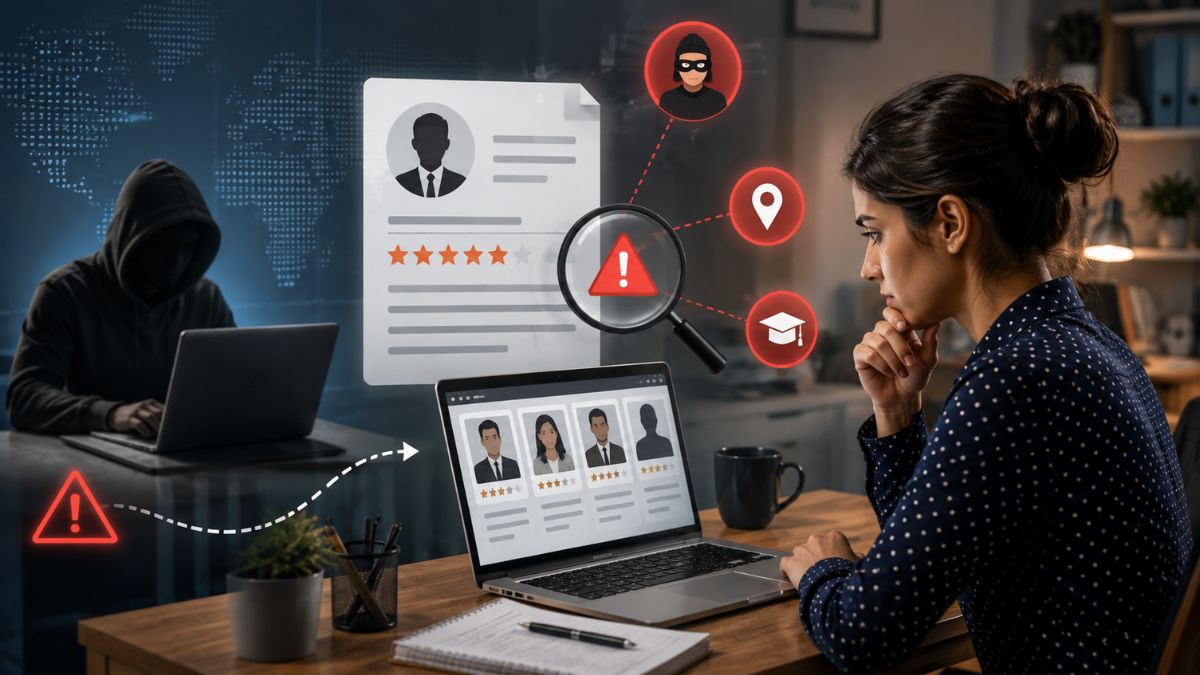





When you’re scanning a résumé, the phrase “diploma mill detection recruiter” might not pop up in your mind—but it should. In the next few minutes I’ll show you how to sniff out fake degrees, verify schools in a flash, and keep your hiring process airtight.
Degree verification is just one part of the screening process, and learning how to spot a fake resume helps recruiters identify other warning signs before candidates move to the interview stage.
What Is a Diploma Mill?
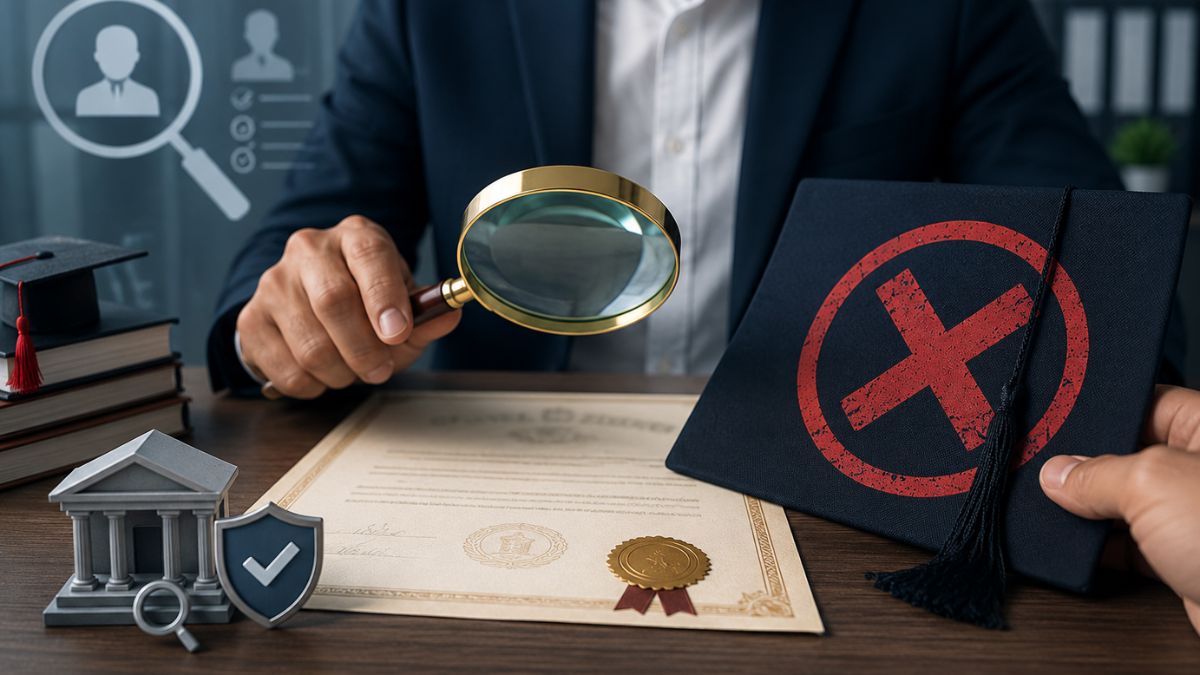
Simply put, a diploma mill is a business that sells academic credentials with little or no academic work. Most of them operate online, promising a Ph.D. in 30 days for a few hundred bucks. Legally, they’re often classified as fraud under 15 U.S.C. § 1119, which means a company that issues an unaccredited degree can be sued for false representation. The danger isn’t just about a scribbled‑out diploma; it’s about compliance, insurance premiums, and the reputational hit when a fake credential slips through your hiring net.
Take the case of a mid‑size tech firm that hired a senior engineer with a “Master’s in Computer Science” from Global University of Technology. Turns out, that school was on the diploma mill list USA and had no recognized accreditation. Within six months the engineer left, the project failed, and the company faced an audit that cost $85,000 in fines. That could have been avoided with solid diploma mill detection recruiter practices.
CHEA and DEAC Accreditation Registry
The Council for Higher Education Accreditation (CHEA) and the Distance Education Accrediting Commission (DEAC) maintain the gold standard lists of recognized accreditors. Their online registries are free, searchable, and updated quarterly. When you type a school’s name into the CHEA database, you’ll see a clear “Accredited” or “Not Accredited” badge. DEAC focuses on distance‑learning institutions, which is where many mills hide.
Why does this matter? Because 97% of legitimate U.S. colleges are listed in one of these registries. If a candidate claims a degree from an institution that’s nowhere to be found, you’ve got a red flag louder than any elevator pitch.
Verifying a School in 60 Seconds
Speed matters when you’re juggling dozens of applications, and tools like SmartScreen™ can automate early phone interviews to streamline vetting.
Here’s my go‑to 60‑second workflow:
- Step 1: Copy the school’s name and paste it into the CHEA search bar.
- Step 2: Look for the accreditation ID (a five‑digit code). If it’s missing, move to the DEAC site.
- Step 3: Check the domain extension. Legit schools usually use .edu, .org, or a country‑specific TLD; .biz or .info are warning lights.
- Step 4: Scan the “About Us” page for faculty bios. Real professors have LinkedIn profiles, publications, or at least a university email address.
- Step 5: Note the turnaround time advertised. If they promise a degree in under a month, you’ve got a fake degree detector cue.
Do this while the candidate’s resume is still open in another tab. You’ll either confirm legitimacy or have enough evidence to flag the credential.
10 Signs of an Unaccredited Institution
Even if the registrar databases don’t give you a clear answer, these ten tell‑tale signs usually point to a diploma mill:
- Lightning‑fast degree delivery. “Get your MBA in 48 hours” is a classic lure.
- Vague or missing faculty listings. No real professors, just titles like “Dr. John Smith, Ph.D.” with no contact info.
- Generic contact details. A single email address like info@university.com and a phone number that leads to a call‑center.
- Absence of a physical campus. Only a virtual address or a mailbox in a remote city.
- Non‑educational language. Marketing copy reads more like a sales pitch than an academic mission statement.
- Accreditation claims that can’t be verified. “Accredited by the International Board of Academic Excellence”—but that board isn’t on CHEA.
- High tuition for a short program. They charge $2,500 for a three‑month “Ph.D.”
- Website design clues. Poor grammar, stock photos, and a homepage that looks like an e‑commerce store.
- International loopholes. Schools registered in jurisdictions with lax education laws, like the Marshall Islands.
- Requests for payment before verification. They want a credit‑card hold before you can see your diploma.
Spot one of these, and you’ve got a strong signal to press the unaccredited college hiring alarm.
What to Do When You Discover a Diploma Mill
Finding a fake credential can feel like hitting a brick wall, but there’s a clear path forward. First, pause the hiring process and document everything—emails, screenshots, verification logs. Next, reach out to the candidate with a polite yet firm inquiry: “We couldn’t locate your alma mater in the CHEA database; could you provide additional proof?”
If the candidate can’t produce a legitimate transcript or official verification, move to the next step: involve your legal team. In some cases, employers also use pre-employment tests as an alternative to credential checks to evaluate whether candidates possess the practical skills required for the role, regardless of academic claims.
In many states, presenting a false degree is considered fraud and can be grounds for termination. Finally, update your ATS with a “diploma‑mill flag” so the history stays visible for future reference.
And remember, you’re not alone. Tools like SmartShield™ can automatically cross‑check degrees against known mill lists, saving you hours of manual digging.
Red Flag Checklist
| Red Flag | Evidence | Recommended Action |
| Fast‑track degree claim | Job ad promises “MBA in 30 days” | Mark as high risk; verify via CHEA |
| Missing accreditation ID | No five‑digit code on school site | Search DEAC; if absent, flag |
| Non‑educational domain | Website ends in .biz | Document and request official proof |
| Vague faculty list | Only titles, no bios | Contact candidate for faculty references |
| Payments before verification | Credit‑card hold requested | Reject application; note in ATS |
You can copy this table straight into your recruiter wiki or Google Sheet. It’s editable, so feel free to add rows for industry‑specific red flags.
Frequently Asked Questions
Can a foreign school be a diploma mill?
Absolutely. Many mills register in offshore jurisdictions to dodge U.S. regulations. The same verification steps apply—check CHEA’s International List or use the World Higher Education Database.
What if the candidate has a legitimate degree but from a now‑closed school?
Closed schools can still be accredited. Look for archived accreditation records, or request a transcript from the state's department of education. If you get an official seal, you’re good.
Is it legal to ask a candidate for their diploma?
In most states it’s fine, as long as you apply the same question to all applicants. The EEOC warns against discrimination, so keep the request consistent across the board.
How often do diploma mill lists get updated?
CHEA and DEAC refresh their databases quarterly. SmartShield updates its internal list weekly, pulling from new court cases and federal enforcement actions.
Do background‑check firms catch fake degrees?
Many do, but not all. Some focus on criminal records and miss academic fraud. That’s why a dedicated fake degree detector tool can fill the gap.
Many organizations are also finding that skills-based hiring reduces reliance on credentials, allowing hiring decisions to focus more on demonstrated ability than academic qualifications alone.
SmartShield Call to Action
Now that you’ve got the playbook, imagine an automated layer that does the 60‑second check for you—scanning CHEA, DEAC, and thousands of known mill entries in real time. That’s what SmartShield delivers. Sign up for a free trial, upload your candidate list, and let the platform flag any suspicious credentials before they even reach your inbox. In my experience, teams that adopt SmartShield cut credential‑fraud investigation time by roughly 78%.
Don’t let a fraudulent diploma derail your next big hire. Equip yourself with the right tools, stay vigilant, and keep your talent pipeline clean.