






A major consideration for maintaining HR compliance is where an employer operates and what is legally permissible to ask during the employment application. For all federal contractors and for private employers in many states, counties, and cities, we know it is illegal to ask job seekers about their criminal conviction history in the job application.
Cadient removed criminal history inquiries from its application template last year with the combined goals of maintaining compliance for federal contractors, shortening the application, and reducing bias in the hiring process.
As we covered in a previous Cadient article, we also know that the EEOC does not allow an applicant’s criminal record to automatically exclude them from consideration for employment. However, almost ¾ of formerly incarcerated individuals are still unemployed a year after release. The stigma is real, and it prevents people from getting an opportunity to work and make a living.

Second Chance Hiring
Many large corporations have introduced second chance employment programs during this time when companies struggle to find and hire qualified candidates for their organizations. These programs give job seekers a chance at meaningful employment. Statistics show that joblessness is the biggest risk factor for someone who was formerly incarcerated to re-offend.
Benefits of Hiring Second Chance Employees
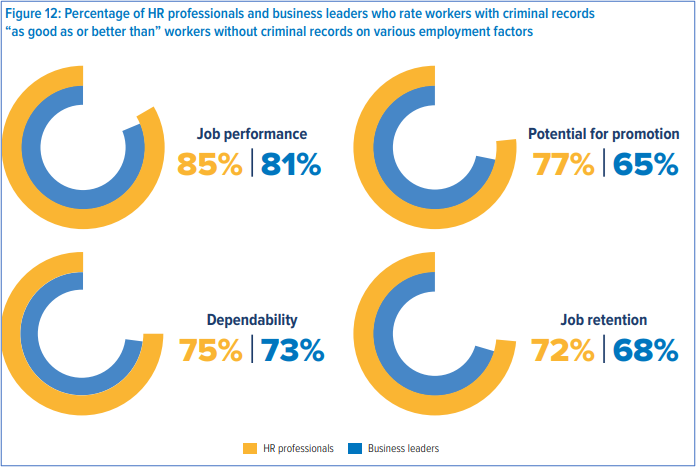
Studies indicate that 85% of human resource leaders report that previously incarcerated individuals perform the same or better than employees without criminal records. Employers find that individuals with a conviction are highly motivated and loyal employees. SHRM Foundation research shows that second chance employees have lower turnover rates, and second chance hiring cultivates an entire culture of loyalty and higher engagement within the whole organization. Increased employee loyalty and motivation to be more productive ultimately lead to stronger company performance.
Positive Impact on Diversity and Inclusion
Considering prospective candidates regardless of their criminal record can have a favorable impact on the outcome of an employer’s diversity, equity, and inclusion goals. Since incarceration disproportionately affects people of color, second chance employment helps employers to make advances toward a more equitable workplace from a demographic perspective. Working with the Second Chance Business Coalition is one step in that direction.