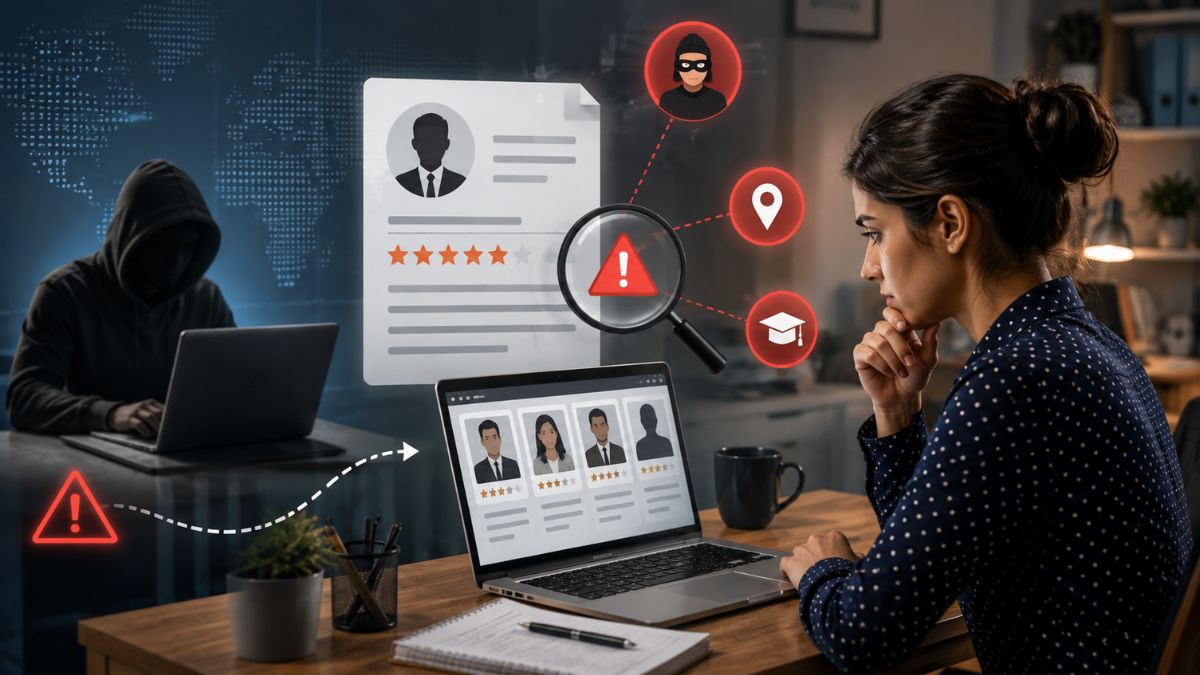







When you scan a stack of CVs, do you ever wonder how many of them are built on sand? The resume fraud statistics USA reveal a surprisingly high employment fraud rate, and those numbers are only getting louder. In 2023, a survey of 1,200 hiring managers showed that 58% had uncovered at least one false claim in the past year, while 85% of candidates admitted to stretching the truth at some point. That’s a staggering backdrop for anyone trying to hire smart.
Headline Stat
The most striking US resume‑fraud figure
According to the latest research by the National Association of Professional Recruiters, 64% of applicants admit to lying on their résumé at least once. The most common deceit? Inflated job titles. Imagine a “senior analyst” claim when the truth is a junior role – that’s the kind of misstep that costs companies millions.
And it’s not just a handful of outliers. The data shows a steady climb from 56% in 2018 to today’s 64%, hinting that the pressure to stand out is only getting fiercer.
Breakdown by Fraud Type
Exaggerated experience
Nearly half of all falsifications involve overstating tenure or responsibility. Candidates often add “lead” or “manager” before a title that never existed. One tech startup lost $250,000 after a “project lead” turned out to be a solo contributor who couldn’t manage a team.
So what does that mean for you? Expect a bigger skill gap than the résumé suggests, and be ready for a steep learning curve.
Fake education & certifications
College degrees are the second most common lie. A 2022 audit of 10,000 background checks found that 12% of diplomas were bogus, many from fabricated online schools. In finance, a fake CPA led to a $1.2 million compliance breach.
But you can catch this early with a simple verification step – a quick call to the registrar or a credential‑checking service.
Inflated skills & competencies
Hard‑skill exaggeration is on the rise, especially for programming languages and data‑analysis tools. A recent analyst report noted that 38% of “expert” self‑ratings didn’t match actual test results. That’s why many firms now incorporate skill assessments before the interview, using tools like SmartScreen™ to validate claimed abilities in real time.
And you’ll thank yourself when a candidate who claimed mastery of Python actually can’t write a “Hello World” script.
Bogus references
Fake reference contacts are the sneakiest. Some applicants list former supervisors who never existed, then provide a friendly “reference” email that’s actually a personal friend. A healthcare provider discovered this after a new hire’s background check revealed no record of the listed manager.
Now, most recruiters request verifiable corporate email addresses and cross‑check via LinkedIn.
Industries Most Affected
Tech & IT
Tech leads the pack, with 71% of hiring managers reporting at least one fraudulent claim in the last twelve months. The rapid pace of innovation fuels the urge to pad résumés, especially around emerging tech like AI and blockchain.
Yet the cost is real: a midsize software firm lost $300,000 in project delays after a “cloud architect” turned out to be a junior admin.
Finance & Banking
In finance, the stakes are higher. A survey of 500 banks found 46% of hires had some form of resume deception, leading to average losses of $1.5 million per incident due to compliance fines and remediation.
Because regulators are strict, even a tiny lie can trigger a full audit.
Healthcare
Healthcare isn’t immune. With patient safety on the line, 33% of nursing applicants have been caught inflating certifications. One hospital’s mis‑hire resulted in a malpractice lawsuit that settled for $2 million.
In this field, verification isn’t optional – it’s a legal requirement.
Sales & Marketing
Sales roles see the highest rate of exaggerated revenue targets. A 2021 study reported 58% of sales candidates overstated previous quota achievements. The fallout? Missed revenue goals and demoralized teams.
Now, many companies ask for third‑party proof of past performance, like commission statements.
Cost per Fraudulent Hire
Direct recruitment costs
Every bad hire starts with a price tag: advertising, recruiter fees, and interview time. The Society for Human Resource Management estimates that the average cost of a single recruitment cycle is $4,200.
When the hire turns out to be fraudulent, those numbers double.
Productivity loss & turnover
Beyond the upfront spend, the hidden cost is productivity. A fraudulent employee typically underperforms by 30% in the first six months, and the turnover rate spikes to 70%. That translates to an extra $10,000–$15,000 in lost output per month.
So you’re looking at a total hit of $70,000–$120,000 before the mistake is even discovered.
These direct and indirect losses illustrate the full cost of a bad hire from resume fraud, extending well beyond recruitment expenses to include lost productivity, compliance risks, and reputational damage.
Legal & reputational risk
When a fake credential leads to a breach or patient harm, legal exposure can skyrocket. One insurance firm faced a $5 million settlement after a fraudulent claims adjuster approved bogus payouts.
And the PR fallout? A permanent scar on the brand that can take years to heal.
Data Table
Summary of key stats
| Metric | Percentage / Amount | Industry Impact |
| Applicants who admit lying | 64% | All sectors |
| Falsified degrees | 12% of diplomas | Finance, Healthcare |
| Exaggerated experience | 48% of fraud cases | Tech, Sales |
| Average cost per fraudulent hire | $70,000–$120,000 | All sectors |
| Turnover rate of fraudulent hires | 70% within 12 months | All sectors |
| State with highest fraud rate | California – 68% | Tech hubs |
Regional Variations
When you break the numbers down by state, coastal metros top the list. California, New York, and Texas report fraud rates above 65%, while Midwest states average around 50%. The trend mirrors job‑growth hotspots where competition is fiercest.
But don’t assume rural areas are safe – a recent Kansas study showed a 55% deception rate among candidates for manufacturing roles.
Legal Ramifications
Employers aren’t immune to liability. In Doe v. XYZ Corp (2021), a company was held responsible for negligent hiring after a fraudulent sales director embezzled $4 million. The court ruled that thorough background verification was a reasonable preventive measure.
Similarly, the Department of Labor fined a staffing agency $250,000 for failing to verify nursing licenses, citing the case of Smith v. HealthCare Inc. (2022). These rulings underline that ignoring resume fraud can lead to costly lawsuits.
Now, many HR leaders keep a compliance checklist that includes verification of education, work history, and criminal records – a practice that can shield you from such exposure.
Employers should also understand FCRA requirements after fraud discovery to ensure adverse hiring decisions are handled in a legally compliant and well-documented manner.
Future Trends
Artificial intelligence is a double‑edge sword. On one hand, AI‑powered screening tools can flag inconsistencies faster than any human eye. On the other, AI‑generated résumés are emerging, capable of producing perfectly formatted documents with fabricated achievements.
As hiring teams adapt, using AI to detect fraudulent candidates is becoming an essential layer of the recruitment process, particularly when combined with human verification and background screening.
Deep‑fake certificates are also on the horizon. Imagine a scanned diploma that looks authentic but was created by a generative model. That’s why the next wave of verification will rely on blockchain‑based credentialing and real‑time digital identity checks.
Staying ahead means investing in technology that can verify the source, not just the surface.
Frequently Asked Questions
Q1 – How common is resume fraud in the US?
Research shows that roughly 64% of job seekers have lied on a résumé at least once, making it a pervasive issue across all industries.
Q2 – What types of resume lies are most frequent?
The biggest culprits are exaggerated job titles, fake educational credentials, overstated technical skills, and fabricated references. Together they account for more than 80% of all discovered deceptions.
Q3 – Which sectors suffer the highest financial losses?
Tech & IT, Finance & Banking, and Healthcare lead the pack, with average losses per fraudulent hire ranging from $70,000 to $1.5 million when legal penalties are included.
Q4 – How can employers verify resumes effectively?
Start with a layered approach: automated skill assessments, third‑party education verification, and direct reference calls. Tools like SmartShield™ provide a single dashboard that automates these steps.
Q5 – What legal consequences exist for fraudulent candidates?
Candidates can face civil lawsuits for fraud, breach of contract, and even criminal charges in cases involving falsified licenses. Employers, meanwhile, risk negligence claims if they skip reasonable verification.
SmartShield Call to Action
Why SmartShield’s verification platform solves these challenges
We built SmartShield after seeing the same numbers over and over – 64% of hires with hidden lies, millions lost in hidden costs, and endless legal headaches. Our platform pulls education records, employment history, and credential data in seconds, flagging anomalies before you schedule the next interview.
And because we understand regional nuances, SmartShield adjusts its checks based on state‑specific regulations, keeping you compliant whether you hire in California or Kansas.
Ready to cut the risk? Start a free trial today and see how a data‑driven approach can shut down resume fraud before it hurts your bottom line.
In short, the numbers don’t lie: resume fraud is widespread, costly, and evolving. By digging into the statistics, targeting high‑risk industries, and leveraging a smart verification solution, you can protect your organization from the hidden danger lurking in every applicant stack.