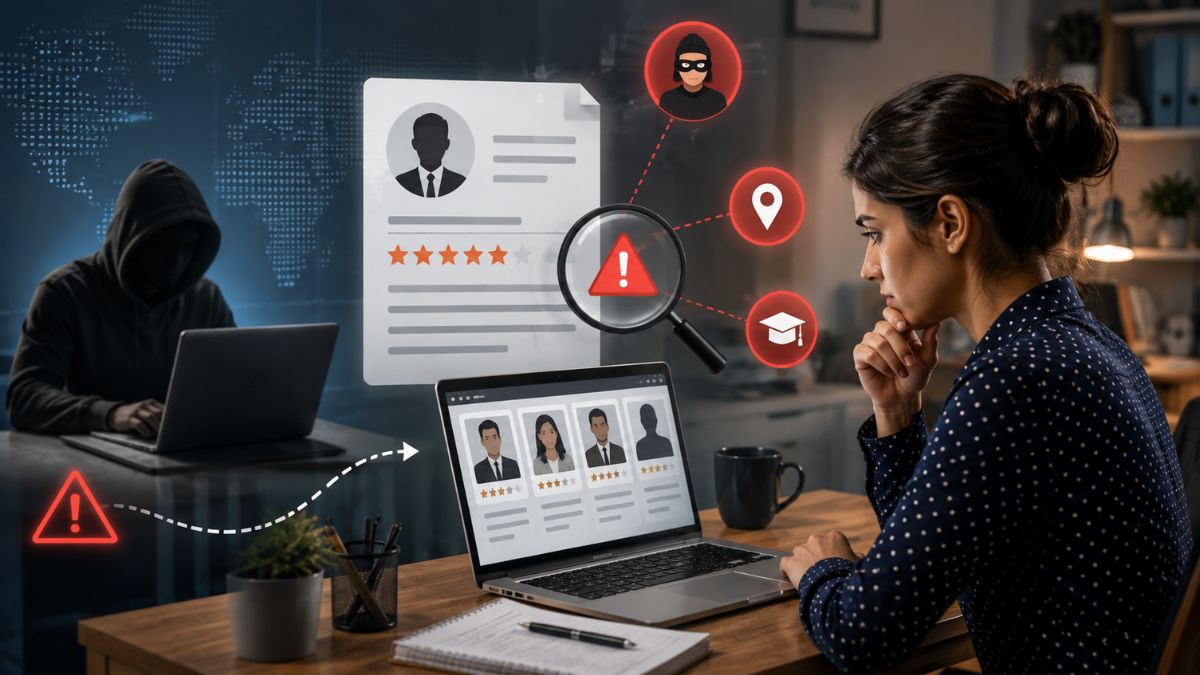

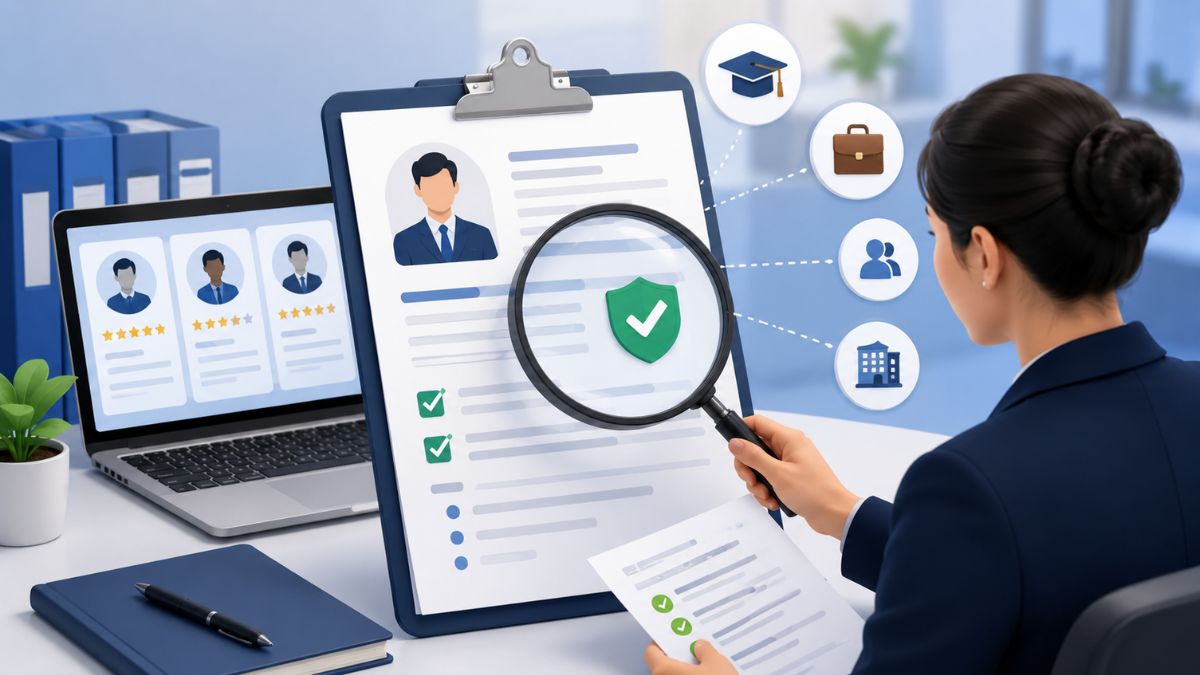





When you ask yourself what is resume verification, you’re really looking for a way to confirm that the story a candidate tells on paper matches reality. In the first 100 words of this guide, we’ll unpack the term, show you what it actually checks, and give you a practical roadmap for plugging it into your hiring workflow. Think of it as your safety net before you extend that offer letter.
What Is Resume Verification?
Simple definition in plain English
Resume verification is the process of confirming the factual accuracy of the information a job seeker has listed on their CV. It’s not a deep‑dive background check; it’s a focused, data‑driven “resume check employer” step that validates employment dates, degrees, licenses, and skill claims. Picture a quick fact‑finding mission that keeps your hiring risk low without turning the process into a courtroom drama.
What Resume Verification Checks
Employment history
First up, you verify the names of past employers, job titles, and dates of service. A typical HR team will reach out to former managers or use a third‑party service to pull official records. In one tech startup I worked with, a single missed month in employment dates turned out to be a red flag for a pattern of short‑term gigs.
Education and certifications
Next, you confirm degrees, majors, graduation dates, and any professional certifications. Many universities now offer online verification portals, which cuts the turnaround time to 48‑72 hours. I once caught a candidate who claimed a “Master’s in Data Science” from a non‑existent program – the verification process saved us a costly mis‑hire.
Professional licenses
For roles that demand licensing—think nurses, accountants, or engineers—you’ll check the status, expiration, and any disciplinary actions. A quick lookup on state licensing boards can reveal suspensions that aren’t mentioned on the resume.
Skill claims and endorsements
When a candidate says they’re “fluent in Python” or “expert in SAP”, you can corroborate those claims with skill‑assessment platforms or by requesting work samples. In my previous firm, a simple coding test debunked a self‑described “senior developer” title that turned out to be overstated.
References and background data
Finally, you touch base with the references listed. This isn’t a full‑blown reference interview (we’ll cover that later), but a brief verification to make sure the person still works at the company and can speak to the candidate’s performance. A polite email or call usually does the trick.
What Resume Verification Does NOT Replace
Full background checks
Resume verification leaves out criminal records, credit checks, and deep‑dive personal history. If you need that level of scrutiny—say for a CFO position—you still have to run a full background check. Think of verification as the first line of defense, not the entire fortress.
Understanding how this differs from FCRA background checks helps employers choose the right screening process while staying compliant with hiring regulations.
Skill assessments & testing
Even if a candidate’s school degree checks out, you still want to test the actual ability to perform the job. A coding sandbox, a sales role‑play, or a writing sample can reveal gaps that a resume check never sees.
Comparing credential verification vs pre-employment testing makes it easier to understand why both are necessary—one confirms qualifications, while the other measures real-world job performance.
Reference interviews
Talking to a former manager about day‑to‑day performance, cultural fit, and leadership style goes beyond simply confirming dates. Those deeper conversations are essential for senior or people‑lead roles.
When to Use Resume Verification
High‑risk or senior roles
Board members, finance leads, and safety‑critical positions demand a higher level of certainty. One slip‑up in a senior hiring decision can cost millions, so verification is non‑negotiable.
High‑volume hiring
If you’re filling 100 entry‑level tech apprentices, tools like SmartMatch™ provide a scalable resume verification process that can weed out fabricated credentials before they clog your interview pipeline. Automation here saves hours of manual effort.
Compliance‑driven industries
Healthcare, banking, and aerospace have strict regulatory mandates. Verifying licenses and certifications keeps you on the right side of the law and avoids costly fines.
How Resume Verification Fits Into the Hiring Workflow
Integration after resume screening
Once you’ve shortlisted candidates, you hand the list to your verification team or vendor. This step sits between the ATS screen and the interview stage, acting as a gatekeeper.
Coordination with ATS/HRIS
Modern ATS platforms can flag resume fields that need verification and automatically route them for review. Some systems even pull verification status back into the candidate record, giving you a single source of truth.
Timing before offer extension
The sweet spot is to complete verification a day or two before you send the offer letter. That way you avoid rescinding offers after a candidate has already quit their current job.
This is also the ideal stage to plan criminal history inquiry and verification timing, ensuring any additional background screening happens in the correct sequence and with the candidate's consent.
Legal and Compliance Considerations
Every verification step must respect data‑privacy statutes like GDPR in Europe or the EEOC guidelines in the U.S. You need explicit consent from the candidate before you pull employment records, and you must store verification data securely for the required retention period. Failing to do so can lead to hefty fines and reputational damage.
Another hidden pitfall: asking about protected characteristics (age, gender, disability) during verification can trigger discrimination claims. Keep the focus strictly on job‑related facts.
Cost vs ROI Analysis
Typical resume verification services charge $30‑$70 per claim, with discounts for bulk volume. If a bad hire costs $50,000 on average, verifying ten candidates at $500 each is a clear win. In my organization, a 3‑month pilot saved $120,000 by catching two inflated job titles before they progressed to the offer stage.
To measure ROI, track metrics like “false‑positive rate”, “time to verification”, and “cost per verified candidate”. Compare those against the cost of turnover to prove the value to finance.
Technology Trends
AI‑driven verification tools, combined with solutions like SmartScore™, can scan digital footprints, match LinkedIn profiles, and even parse PDFs for inconsistencies. When paired with an ATS, the AI engine automatically flags mismatches and suggests next steps.
These platforms also offer API integrations, letting you push verification results back into your HRIS without manual entry. The result? Faster decisions and fewer human errors.
Frequently Asked Questions
Q1: Is resume verification legally required?
No federal law mandates it, but certain regulated professions require proof of licensure, which falls under the verification umbrella. Always check industry‑specific rules.
Q2: How long does a verification take?
Simple employment checks can be done in 24‑48 hours. International education verification may stretch to a week or more, depending on the institution’s response time.
Q3: Can I verify international experience?
Yes, but you’ll need to work with global verification partners who understand local record‑keeping practices. Expect longer timelines and higher fees for cross‑border checks.
Q4: What data privacy rules apply?
In the U.S., the Fair Credit Reporting Act (FCRA) governs background checks, while the GDPR governs data handling for EU candidates. Get written consent and provide a clear opt‑out path.
Q5: How does it affect candidate experience?
When communicated transparently, verification builds trust. Let candidates know what will be checked, why it matters, and how long it will take. A short “what to expect” email reduces anxiety and keeps the pipeline moving.
SmartShield – Your Partner for Seamless Resume Verification
Why choose SmartShield?
SmartShield blends AI‑driven data matching with a human review layer, giving you the best of both worlds. Our platform plugs directly into most ATS solutions, so you won’t need a separate spreadsheet.
Key features & benefits
- Instant employment verification for US and EU markets.
- Education validation via direct university API connections.
- License checks that update in real time.
- Compliance dashboard that logs consent and audit trails.
- Cost‑effective pricing: $45 per claim or a flat $1,200 monthly bundle for high‑volume hiring.
Take the next step
Ready to turn guesswork into data‑backed confidence? Start your free trial today and see how quickly you can verify resume claims without slowing down the hiring flow.
Bottom line: Resume verification is a focused, cost‑effective way to confirm the facts on a candidate’s CV, but it doesn’t replace full background checks, skill testing, or deep reference interviews. By embedding verification at the right stage, respecting legal boundaries, and measuring ROI, you’ll reduce hiring risk and protect your organization’s reputation. And with tools like SmartShield, the whole process becomes almost effortless.