





Understanding Candidate Identity Fraud
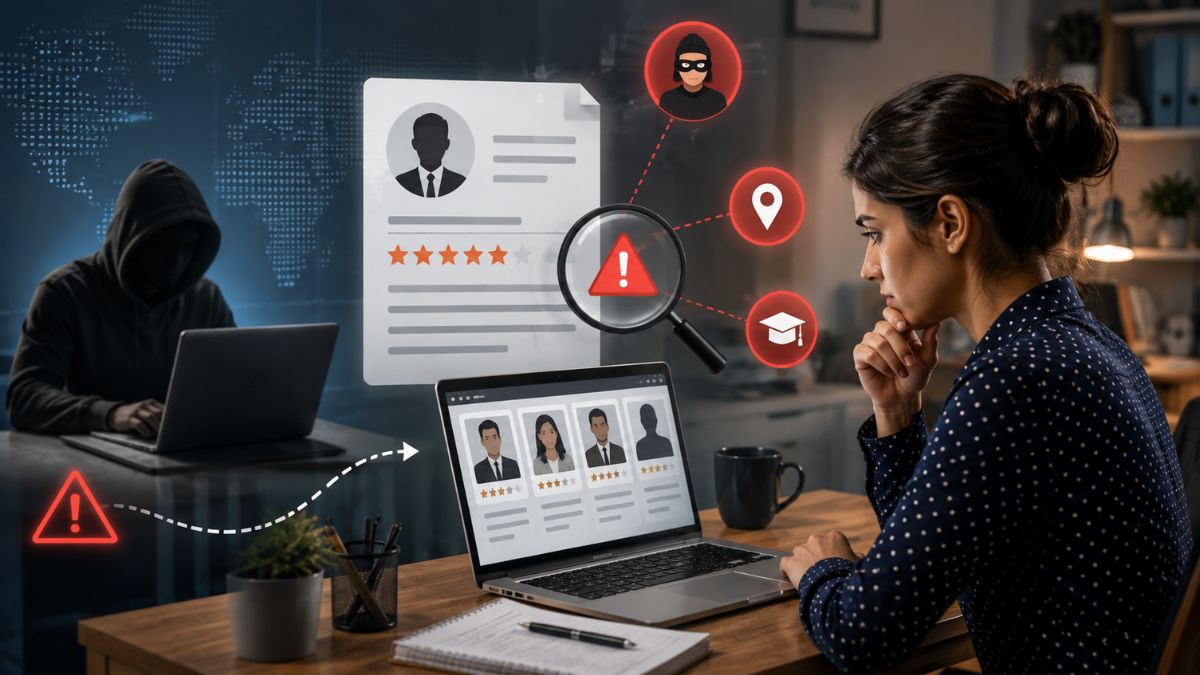
First, let’s get clear on what candidate identity fraud 2026 actually looks like. It isn’t just a fake résumé; it’s a whole ecosystem of deceit that can start before the interview and linger long after the offer is signed.
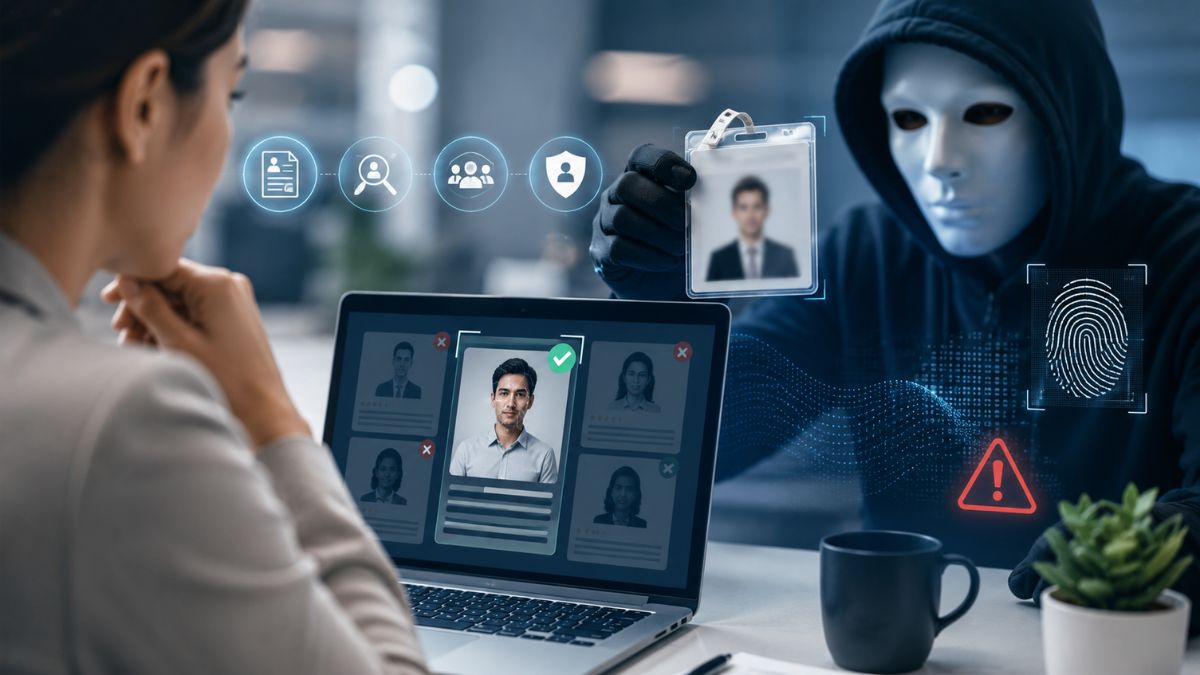
We can split the problem into three main buckets: proxy interview hiring, identity fabrication, and profile impersonation. In a proxy interview, a seasoned recruiter or a friend steps in and pretends to be the applicant. Identity fabrication is when someone builds a synthetic persona using AI‑generated photos and fabricated work history. Profile impersonation means an applicant steals an existing professional’s LinkedIn or GitHub profile to boost credibility.
Why Remote Hiring Has Sparked a Surge
Since the pandemic, remote work has become the default for many firms. That flexibility is fantastic—until it opens the door for fraudsters who can now operate from any time zone.
Without a physical office, we lose the subtle cues that used to weed out impostors: the way a candidate walks into a reception, the background of their interview space, the feel of a handshake. Those signals have been replaced by pixelated video and digital files, and that’s a gold mine for bad actors. The challenge is becoming even harder as AI-generated resumes flood ATS pipelines, making it increasingly difficult for recruiters to distinguish genuine applicants from fabricated profiles before the interview stage.
Numbers That Speak Volumes
A 2025 survey by the HR Risk Institute found that 42% of Fortune 500 companies reported at least one fraudulent hire in the past year. The same study pegged the total cost of candidate identity fraud at $600 billion globally, a figure that dwarfs traditional hiring expenses.
From 2024 to 2026, the incidence of synthetic identity fraud rose by roughly 18% year‑over‑year, according to a joint report from Gartner and the National Association of Professional Background Screeners. Those stats aren’t just numbers; they’re a wake‑up call for every hiring leader. Looking deeper into resume fraud statistics and financial impact helps organizations understand why investing in stronger verification processes is far less expensive than recovering from a fraudulent hire.
Legal Landscape and Compliance Shifts
The 2026 amendment to the Fair Credit Reporting Act (FCRA) now requires employers to obtain explicit consent before running AI‑driven identity checks. Skipping that step could land you in a costly lawsuit.
In the EU, the Digital ID Regulation mandates that any verification tool must be interoperable with national e‑identity schemes. That means if you’re using a third‑party solution, it better be able to talk to France’s FranceConnect or Germany’s AusweisApp2.
Practical Detection Methods
Tools like SmartScreen™ bring AI‑powered video analysis out of the futuristic buzzword realm. Modern platforms can flag deep‑fake lip‑sync anomalies in real‑time, giving you a red flag before the second interview.
Another tactic is digital footprint analysis. A quick scan of a candidate’s social media, code repositories, and conference talks often reveals inconsistencies a polished résumé can hide.
Multi‑factor verification is also getting smarter. Instead of just a password and a code, you might ask for a biometric voice sample that’s cross‑checked against a known public interview. Many organizations are now using AI to detect fraudulent candidates by combining biometric verification, behavioral analysis, and document validation instead of relying on manual reviews alone.
Ethical Considerations of AI Verification
Deploying AI to sniff out fraud sounds sensible, but it brings its own set of dilemmas. Bias can creep in if the training data favors certain demographics, leading to false positives for under‑represented groups.
Privacy is another hot topic. Employees and candidates alike are wary of tools that harvest facial scans or voice prints. A transparent policy—explaining what data is collected, how long it’s stored, and who can see it—helps build trust.
We’ve seen a start‑up in Berlin pull back a biometric screening product after regulators flagged that it violated GDPR’s “purpose limitation” rule. That case reminds us to keep ethics front‑and‑center, not tacked on as an afterthought.
Future‑Proofing Hiring Strategies
Think beyond the offer letter. Continuous identity validation means you keep monitoring key signals—like sudden changes in login patterns or new public claims—through the first year of employment.
One practical approach is to schedule a “post‑onboarding health check” at the 90‑day mark. During that call, you verify the new hire’s identity documents again and run a quick AI‑screen of their recent digital activity.
Companies that have adopted this loop report a 27% drop in fraud‑related turnover, according to a 2026 case series from the International HR Association.
Case Study: A Proxy Interview Gone Wrong
Last spring, a mid‑size fintech firm hired a senior data scientist after a flawless video interview. Two months later, the new hire vanished, leaving behind a gap in a critical project.
Investigation showed that the “candidate” had never actually spoken English fluently. The interview was conducted by a friend who used a deep‑fake avatar and a scripted script. The fraudsters also slipped in a fabricated LinkedIn profile that referenced three published papers—none of which existed.
Key lessons? First, always request a live, unscripted coding challenge. Second, cross‑verify publications with databases like IEEE Xplore. Third, run an AI‑driven voice consistency check across all recorded interactions.
Actionable Guidance for HR Leaders
Start with a risk assessment. Identify which roles are most attractive to fraudsters—usually those with high salaries or access to sensitive data.
Integrate multi‑factor verification into your ATS. Make sure every candidate is required to upload a government‑issued ID and a biometric sample before the first interview.
Train recruiters on the tell‑tale signs of proxy interviews: overly polished answers, lack of personal anecdotes, and mismatched body language.
Partner with a compliance‑savvy vendor that can track evolving regulations in real time. That saves you from costly retrofits later.
SmartShield: Your Defense Against Candidate Identity Fraud
Tools like SmartShield™ blend AI video analysis, biometric verification, and continuous post‑hire monitoring—all in a single dashboard. That’s what SmartShield delivers.
With SmartShield you’ll get:
- Real‑time deep‑fake alerts during live interviews.
- Automated multi‑factor checks that stay compliant with the 2026 FCRA.
- Post‑onboarding identity health checks that keep fraud at bay for the first 12 months.
HR leaders who switched to SmartShield reported a 32% reduction in fraudulent hires within the first six months. Ready to protect your talent pipeline? Schedule a demo today and start hiring with confidence.
Key Takeaways
The threat of candidate identity fraud is louder than ever in 2026, driven by remote hiring, AI‑generated personas, and lax verification practices. But you don’t have to be a victim.
By understanding the taxonomy of fraud, staying ahead of legal changes, adopting ethical AI tools, and extending verification beyond the offer, you can safeguard your organization’s most valuable asset—its people.
Remember, the fight isn’t a one‑off battle; it’s a continuous process. Equip yourself with the right technology, keep the conversation open with your team, and turn fraud prevention into a competitive advantage.